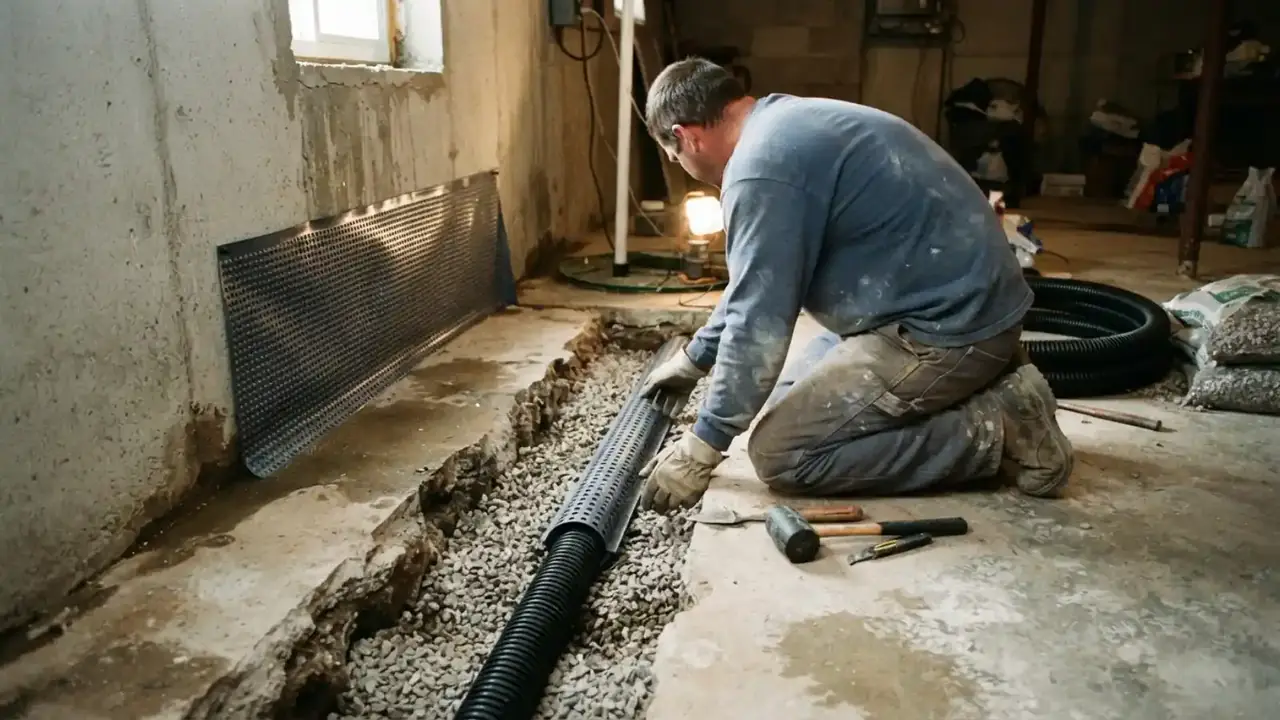
Basement waterproofing in Huntley, IL means stopping water that comes in through the floor, walls or the joint between them. It can show up as damp patches, a white mineral crust on concrete, standing water after rain or a musty smell that never leaves.
Waterproofing is not one product. The right fix depends on where the water comes from. Water that seeps in at the floor wall joint needs an interior drain. Water that pours through a crack needs the crack sealed and the exterior drainage looked at. Water that rises through the floor in spring points to groundwater and a sump system.
We start with an assessment. You get a plain description of what we see, what we recommend and what it costs.
Where basement water comes from
Water enters a basement through four common routes. Hydrostatic pressure pushes it up through the floor and the cove joint. Cracks in poured walls admit water in heavy rain. Window wells that fill and leak, and downspouts that dump next to the foundation, send water against the wall.
Plumbing leaks can also look like basement water. A failing supply line, a leaking water heater or a sewer backup can leave a wet floor that is not groundwater at all. We check those first, because the fix is cheaper. See leak detection for how.
Before spending on waterproofing, check the easy things. Gutters clear, downspouts extended six feet from the house, and grading that slopes away from the foundation. These steps solve many seepage problems for little money.
Waterproofing options
Each approach solves a different problem.
| Approach | What it does | Best for |
|---|---|---|
| Interior perimeter drain with sump | Collects water at the footing and moves it to a pit and pump | Seepage at the floor wall joint, rising groundwater |
| Crack injection | Seals a specific crack from the inside | A single crack with no widespread seepage |
| Exterior drainage and regrading | Redirects water before it reaches the wall | Downspout and grade problems |
| Vapor liner and wall panels | Directs water behind a liner to the drain | Damp walls in a crawl space or wall seepage |
Sump pumps and drain systems
An interior drain system is only as good as its pump. Water collected at the perimeter flows to a pit, and the pump moves it out. A failed pump means the drain overflows into the basement.
See sump pump service for the equipment side. The Village of Huntley code does not allow sump discharge to the sanitary sewer or the public right-of-way, so the discharge has to be planned. Development Services at (847) 515-5252 answers permit questions.
Some interior waterproofing work needs a permit, and some does not. We tell you what applies for your project.
Huntley soils, the water table and your basement
Huntley is in northern Illinois on glacial deposits, where heavy spring rain and thaw raise the water table. The effect is strongest on low lying lots and wherever the grade sends runoff toward the house, so a lot that sits lower than its neighbors tends to see it first.
A basement that stayed dry for years may start to seep after a wet season or after a neighbor regrades. A new drain or a change to your gutters can change the pattern. Watch where water pools outside after a storm. That is where the problem often starts.
If a finished basement has water damage, dry the area fast. Mold begins within a day or two of persistent dampness. A professional water damage service handles drying, and we handle the plumbing source.
What affects the cost
We quote before work starts.
- Length of drain. Longer perimeters cost more.
- Wall and floor condition. Cracks and finished surfaces add work.
- Sump system. A new pit and pump adds to the price.
- Exterior work. Digging and regrading are priced separately.
- Access. Finished walls need to be opened.
What to do while the basement is wet
Safety comes before cleanup.
- Turn off power to the area at the panel if water is near outlets or appliances, and do not stand in water to do it.
- Do not use a wet vacuum plugged into a wet outlet. Use a GFCI-protected outlet or call for help.
- Move belongings off the floor and open windows or run a dehumidifier to start drying.
- Photograph everything before cleanup and keep receipts for your insurer.
Frequently asked questions
Start outside. Clear gutters, extend downspouts and check the grade. If water still comes in after rain, an interior system may be the answer.
Yes, many cracks can be sealed from the inside. If water comes through in several places, drainage is the better answer.
If you have an interior drain, yes. The pump moves the water out.
Persistent dampness can lead to mold. Dry quickly and call a water damage service for large areas.
Yes. See Hampshire and Pingree Grove.
Yes. The 24/7 line is open. If the source is a failed sump pump, see sump pump service.
Still unsure what you are dealing with? Describe it to a dispatcher and get a straight answer.
Call (847) 281-8626Waterproofing is a long-term solution, and it is worth getting right. We tell you what we see and what we do not know.
According to the Village code, interior drain and sump work follows the Illinois State Plumbing Code that Huntley adopted, including its limit on where sump pump discharge may go.