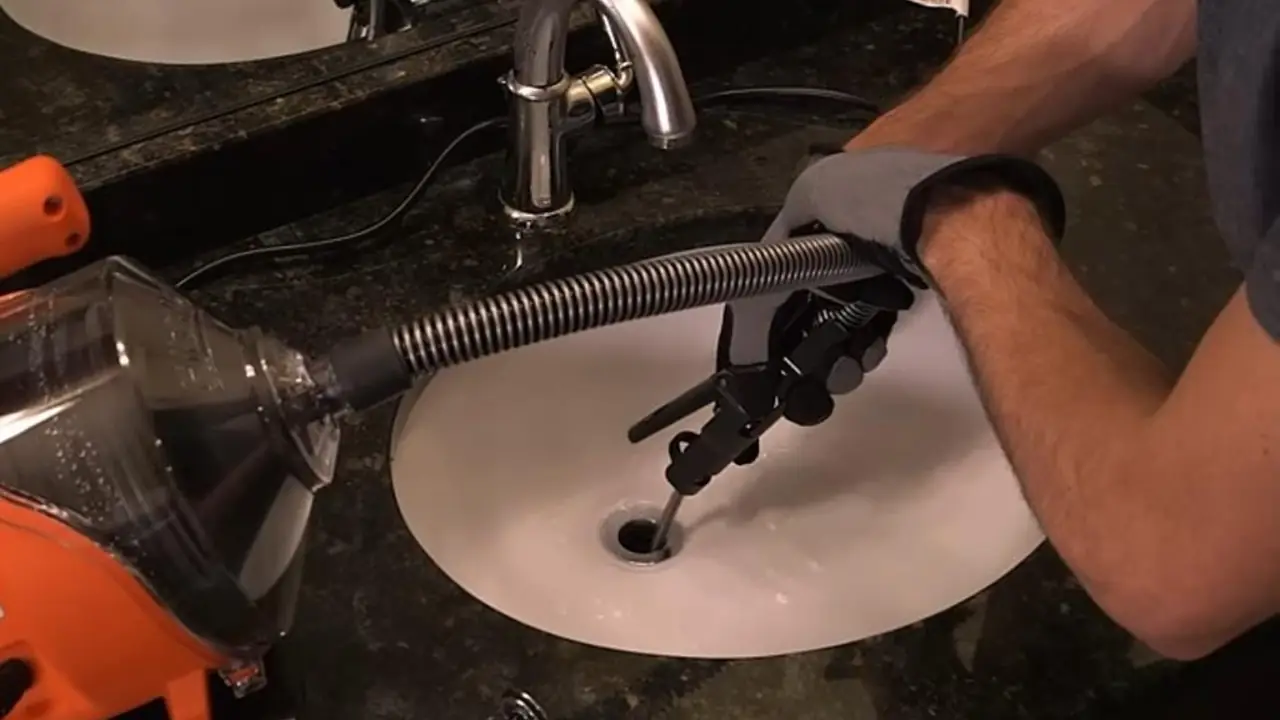
Drain cleaning in Huntley, IL means removing whatever is blocking a pipe, then proving the line runs clear again. The blockage might be grease in a kitchen branch, hair and soap in a tub trap, or roots and paper in the line that leaves the house.
We handle all three. A technician starts by finding which drains are slow and which are dead stopped, because that pattern shows where the clog sits. One slow sink usually points to its own trap or branch. Every drain in the house gurgling points to the main line.
Most calls we hear start with a symptom, not a service name. A washing machine that backed up into the laundry tub, a toilet that bubbles when the shower drains, or a kitchen sink that fills and sits there. All of those are drain cleaning jobs, and all of them get the same first question: where does the water go when you run it?
When a clogged drain is an emergency
A drain turns into an emergency when water has nowhere to go but your floor. A toilet that overflows, a floor drain that bubbles up in the basement, or sewage showing in a tub all qualify. We take those calls around the clock, including weekends and holidays.
Do not keep flushing or running water while you wait for us. Every gallon you add has to go somewhere.
- Stop using sinks, tubs, the dishwasher and the washing machine until the line is cleared.
- Do not pour chemical drain cleaner into a standing blockage. It sits in the pipe and burns whoever opens it next.
- Move rugs, cardboard boxes and electronics away from any basement floor drain.
- Keep kids and pets out of any water that smells like sewage.
Reading the clog from the symptoms
Where the blockage sits decides which tool clears it. A single fixture that drains slowly almost always has a trap or branch problem within a few feet of the drain. Two or three fixtures on the same floor that drain slowly point to a shared branch. Fixtures on every level that gurgle or back up point to the main drain, which carries everything out of the house.
Kitchen sinks are the most common single-fixture call because grease cools and hardens inside the pipe wall. Bathroom sinks and tubs clog with hair and soap film. Basement floor drains usually back up when the main line is partly blocked and water finds the lowest opening.
This matters before you pay for anything. If a technician finds the clog is in the main line, a bathroom-sink-sized cable will not reach it. If it is in a trap, sending a main line machine is overkill. Ask which one you are paying for.
Which method fits which clog
Drain cleaning is not one tool. These are the three methods we use in Huntley homes and when each one makes sense.
| Method | Best for | Where it falls short |
|---|---|---|
| Hand or drum cable (snaking) | Hair, soap and paper clogs in a trap or short branch, kitchen sink blockages | Leaves a cable-width hole through grease or roots, so the clog can return |
| Cable with cutting head | Root intrusion and heavier blockages in a 3 or 4 inch line | Cannot scour the pipe wall clean. See hydro jetting for that |
| Hydro jetting | Grease buildup, scale and repeat clogs that keep coming back | Not for a pipe that is broken or collapsed. A camera check comes first |
A drain that is only slow on Tuesday is a full blockage by Saturday. Call now and we will tell you how fast it needs to be handled.
Call (847) 281-8626Kitchen sink clogs and the grease problem
A kitchen drain that clogs every few months is rarely bad luck. Hot cooking grease runs down the pipe as a liquid, cools a few feet past the trap and coats the wall. Each wash adds another film until the opening is the size of a pencil.
We clear it with a cable first, then check how the line drains with the water running at full flow. If the clog was grease, we explain what has been going down the sink. A garbage disposal grinds food, but it does not stop grease. If yours is also acting up, our garbage disposal repair page covers that side.
Shower and tub clogs run on a different schedule. Hair wraps around the strainer crossbar and the trap arm below it. Pulling the stopper and clearing the visible hair often solves it. When water still pools after that, the blockage is deeper in the branch.
What to check before you call
A few quick checks save time on the phone and sometimes save the visit.
- Run the other drains in the house. If only one fixture is slow, the clog is local to that fixture.
- Check the lowest drain in the house, usually a basement floor drain or laundry tub, while a toilet is flushed upstairs. Water rising there means the main line is restricted.
- Look for a cleanout cap, a round threaded plug on the main line, in the basement or crawl space. Do not open it if water is already at the opening.
- Note how long it has been slow and whether anything changed, like a remodel, a new disposal or a tree removal.
Why Huntley drains clog the way they do
Huntley grew fast after Sun City Huntley opened its first homes in 1999, and the Huntley Area Public Library's local history counts eight new schools since 1995. A lot of the housing around Talamore, Covington Lakes, Southwind and Wing Pointe is newer construction with PVC drain lines, which resist corrosion but not grease or roots.
Roots are a bigger issue on lots with mature trees near the sewer lateral, usually the older parts of town around the downtown that was platted in 1853. If clogs come back after a cable clears them, a camera check tells you whether roots, a belly in the pipe or a joint offset is the cause. See sewer camera inspection for how that works.
Huntley sits in both McHenry and Kane counties, and the Village handles water and sewer service for its residents. The private line from your house to the connection belongs to you, so a clog inside your property line is your repair, not the Village's.
What affects the price of drain cleaning
We give a clear price before work starts. These are the factors that move it.
- Location of the clog. A fixture trap is a smaller job than a main line cleared from a cleanout.
- Access. An open cleanout speeds things up. A line that has to be reached through a toilet pull or roof vent adds labor.
- Method. Cable work and jetting use different equipment, and jetting costs more.
- Time of day. Night and weekend dispatch costs more than a scheduled weekday visit. We tell you before you commit.
- Repeat clogs. If a clog keeps returning, a camera inspection may be the right first step instead of a third cable run.
Want your real number? Call (847) 281-8626 and describe what the drains are doing.
Frequently asked questions
Yes. The line is open 24/7, including holidays. A dispatcher asks which drains are affected and whether water is spilling, then sends the next available plumber. After-hours calls can cost more than a weekday visit, and you hear the price before work begins.
Run water in other fixtures. If only one sink or tub is slow, the clog is local. If a basement drain bubbles when you flush upstairs, or several fixtures back up together, the main line is partly blocked.
A cable clears most kitchen clogs. If grease has built up along a long run of pipe or the clog returns within weeks, jetting removes the film that a cable leaves behind. A technician can tell once they see what comes out on the cable.
We advise against it. If the cleaner does not clear the clog it sits in the pipe, and it can burn skin and damage some fixtures. Plain hot water and a plunger are safer first steps.
No. The Village operates the public water and sewer system. Pipes inside your home and the line out to the connection are your responsibility. Call the Village Water Division at (847) 515-5222 if the problem appears to be in the street.
Yes. We dispatch from Route 47 in Huntley and cover Lake in the Hills, Algonquin, Pingree Grove, Gilberts and Hampshire.
Still unsure what you are dealing with? Describe it to a dispatcher and get a straight answer.
Call (847) 281-8626If a drain is slow today, it is cheaper to clear now than after it overflows. Our hydro jetting and sewer line cleaning pages explain the heavier options if a cable does not solve it.
According to the Village of Huntley, the pipes inside your property line are your responsibility, and work that changes plumbing systems follows the Illinois State Plumbing Code the Village has adopted.