The vinegar and baking soda trick is popular because it is cheap, safe for most pipes and fun to watch. The fizz is real chemistry. Baking soda is a base, vinegar is a mild acid, and they react to make carbon dioxide and water.
What it does not do is dissolve a solid clog. The fizz is mostly bubbles and some loosening of light film. It can freshen a drain and help with a mild slow-down caused by soap and a bit of grease. It will not clear hair, a washcloth or a hardened plug.
This guide shows how to use it properly, what to expect and when to move on to a better tool.
How to do it properly
Remove standing water if you can. Pour about half a cup of baking soda into the drain, followed by half a cup of white vinegar. Cover the drain with a plug or a wet cloth for ten to fifteen minutes so the reaction works down the pipe instead of up out of it.
Then flush with hot, but not boiling, water. Boiling water can soften or loosen the joints of some plastic pipes and crack older porcelain. Very hot tap water is enough.
For a drain that is only a little slow, this can help. Repeat once if needed, and then try a plunger or a hand drain tool.
What works for which clog
Match the tool to the cause.
| Cause | Vinegar and baking soda | Better tool |
|---|---|---|
| Light soap and film | Can help | Hot water flush, repeat |
| Hair in a tub or sink | Little effect | Pull the hair out with a drain tool or a plastic strip |
| Grease in a kitchen line | Little effect | Cable, or hydro jetting for repeat clogs |
| Foreign object | No effect | Remove the trap and retrieve it |
| Roots or a main line plug | No effect | Cable or jet, see sewer line cleaning |
Safer than chemical cleaners, but not magic
Commercial drain cleaners use strong caustic or acid. They can burn skin, damage some pipes and fixtures and make a plumber's job dangerous. If one does not clear a clog, it sits in the pipe and the plumber has to work around it.
Vinegar and baking soda avoid that. They are mild, and they will not harm a septic system or standard household plumbing in normal amounts. Do not mix them with a commercial cleaner, since the combination can release hazardous fumes.
If you tried vinegar and baking soda and the drain is still slow, you are in the same position as before, but with nothing worse. That is the main point in its favor.
Better habits than any cleaner
Prevention is cheaper than clearing.
- Use a hair catcher in tubs and showers and empty it often.
- Wipe grease out of pans with a paper towel before washing.
- Run hot water for a few seconds after using the kitchen sink.
- Flush a slow drain with very hot water once a month.
- If the same drain clogs more than twice a year, get it looked at.
When to call a plumber
Call when the drain is fully blocked, when more than one fixture is slow, or when a clog comes back within weeks. Those point to a line problem, not a trap problem. See drain cleaning for what the options are, and hydro jetting for lines that keep clogging.
Do not wait for water to come up through a floor drain. That is a main line sign, and it is an emergency.
What to try when vinegar fails
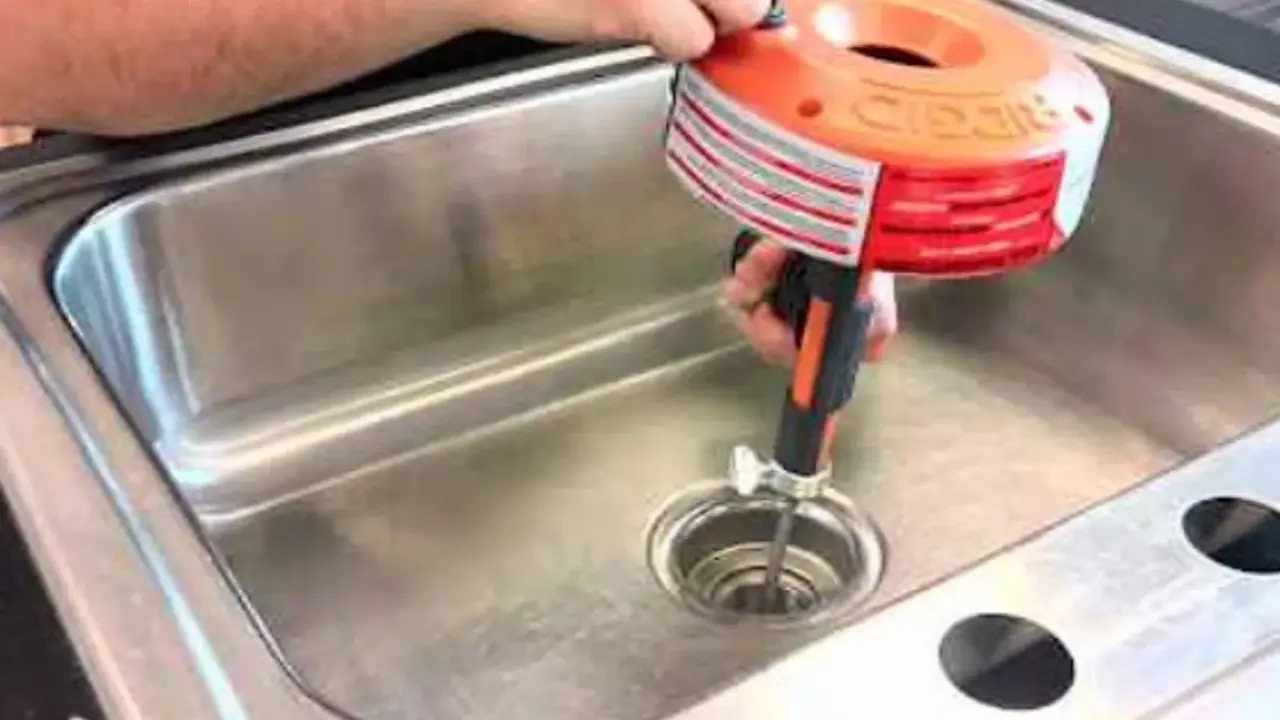
A drain tool, a plastic strip with barbs along its edges, pulls hair out of a sink or tub drain. It costs very little and it works on the most common bathroom clog. Slide it down, twist and pull it back out.
For a kitchen sink, remove the trap and clean it into a bucket. Most of a kitchen clog sits in the first few feet of pipe, and the trap is where it collects. If neither step helps, the clog is farther along the line.
Signs the clog is not a drain problem
If more than one fixture is slow, a single-drain remedy will not help. A toilet that gurgles when the washer drains, or a floor drain that bubbles, points to a branch or main line problem. Do not keep pouring products down the pipe.
Stop using water and call. A cable or a jet reaches what a home remedy cannot, and a camera shows why the clog formed.
Why the fizz only goes so far
Baking soda and vinegar react to make carbon dioxide and a mild salt solution. That loosens a thin film of soap and food residue near the opening. It does not dissolve a hair clog, and it does not reach a blockage several feet down the line.
If the water still drains slowly after two rounds, stop. Repeating the treatment adds standing water to a drain that cannot carry it away. A hand auger or a professional cleaning is the next step, and it usually costs less than a drain that backs up into the cabinet.
Huntley note: your water supply and your drains
Huntley's water comes from deep wells and is treated at five plants using cation exchange. The Village's 2023 water quality report lists sodium at 130 ppm and does not publish a hardness figure. We cannot say from the report whether mineral scale builds in your drains.
If you see white crust around faucets, drains or the showerhead, vinegar is useful for descaling those fixtures. Soak removable parts for an hour. If you have no crust, scale is probably not your clog.
The Village Water Division at (847) 515-5222 can answer questions about the public supply.
Frequently asked questions
It can help with light film and soap. It does not clear hair, grease plugs or foreign objects.
In normal household amounts, no. Do not use it with a commercial cleaner.
Not for plastic pipes or older porcelain. Very hot tap water is safer.
Once a month is plenty for maintenance. If a drain needs it every week, there is a clog to remove.
Not from the water. Hair, grease and wipes cause most clogs. Test your tap if you see scale.
Still unsure what you are dealing with? Describe it to a dispatcher and get a straight answer.
Call (847) 281-8626If a drain does not respond, call. We also cover Gilberts and Pingree Grove, and sewer line cleaning covers the main drain.
Plumbing product guidelines warn against mixing drain cleaners, so keep vinegar away from commercial products.