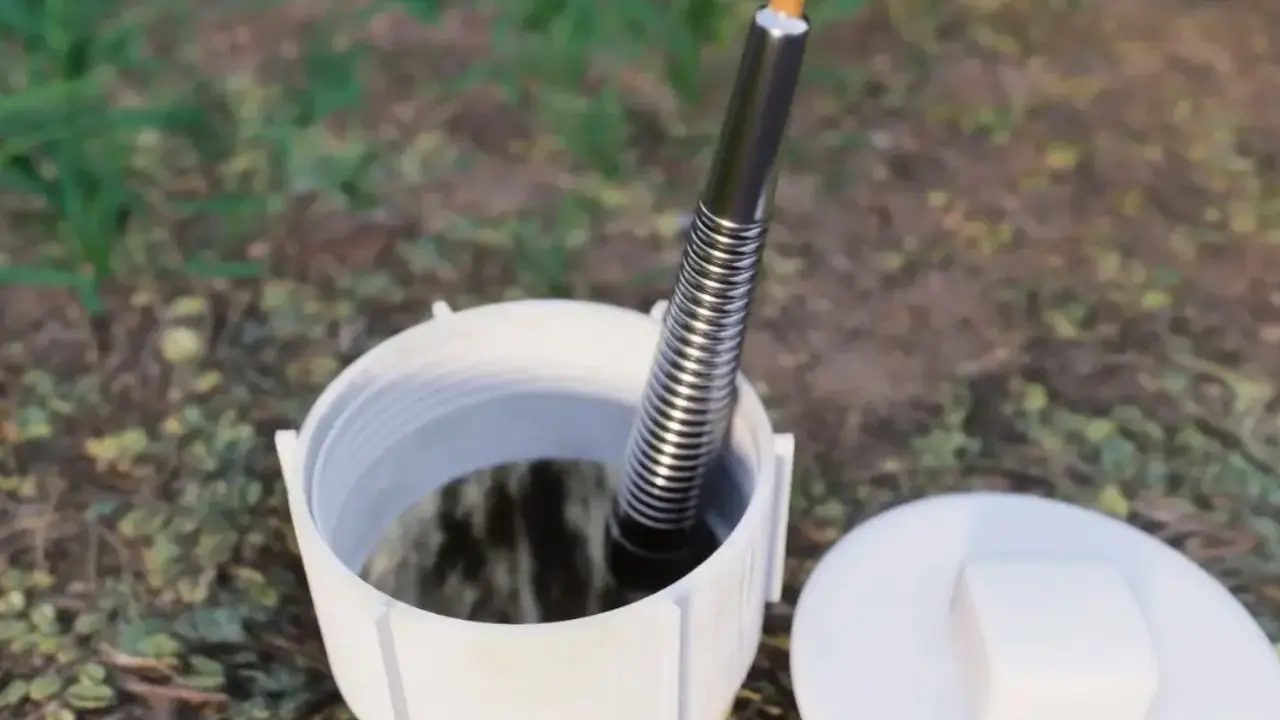
A sewer line is the main pipe that carries all of your house's waste out to the public connection. When it clogs, you do not get one slow sink. You get several drains slowing together, toilets gurgling and, in the worst case, sewage coming up through the lowest drain in the basement.
Cleaning it is possible, but not every method is a homeowner project. This guide separates what is safe to try from what needs the right machine and training.
First, confirm it is the main line and not a single fixture. Run water at a sink and a tub. If both drain slowly, and a toilet gurgles when you do, suspect the main.
What you can try before calling
Stop using water. Every gallon you add has to go somewhere. Find the cleanout, a capped pipe with a square or round nut on the cap, usually near the foundation, in a basement floor or outside. If water is already at the cap, leave it closed.
If the cleanout is dry, you can remove the cap slowly with a wrench and see whether water is waiting behind it. Be ready for a rush of waste. Wear gloves and keep a bucket handy. A hand-cranked drain auger is a limited tool on a main line, and it can get stuck.
If the blockage does not clear in one try, stop. Forcing a cable can damage a weakened pipe.
Methods for cleaning a sewer line
Different blockages need different tools.
| Method | What it clears | Limits |
|---|---|---|
| Hand auger | Light blockages near the cleanout | Short reach, can snag on roots |
| Power cable machine with cutting head | Roots, heavy buildup, plugs | Can leave residue on the wall |
| Hydro jetting | Grease, scale, fine roots, wall film | Pipe must be sound |
| Camera inspection | Finds the cause of repeat clogs | Does not clear the line by itself |
Signs the clog is in the main
Several drains slow at once. A toilet gurgles when another fixture runs. A basement floor drain bubbles or backs up. A bad smell in the basement with no obvious source. A pattern of clogs that return within weeks.
Roots are the most common cause of repeat clogs. They enter at joints, grow, and catch paper and grease. A cable can cut them back, but they return unless the joint is repaired. See sewer inspection for how a camera finds them.
Grease is the second common cause. It cools in the pipe and builds up slowly. Jetting removes it, and a change in kitchen habits keeps it from coming back.
How to keep a sewer line clear
Habits matter more than products.
- Do not flush wipes, even if the package says flushable.
- Pour cooking grease into a can and throw it away, not down the drain.
- Do not plant large trees over the sewer lateral. Choose shrubs.
- Have a camera check done if you have had roots or repeat clogs before.
- Know where your cleanout is and keep it accessible.
What a professional cleaning looks like
A plumber starts at the cleanout and feeds a heavy cable down the line. The cutting head spins and chews through roots and plugs. When the line flows, a camera confirms what is left on the pipe wall and whether the pipe is sound.
If the camera shows heavy buildup, jetting finishes the job and leaves the wall clean. If it shows a crack, offset or belly, the conversation shifts from cleaning to repair, and you have footage to show for it.
What to expect on cost and timing
A cleaning that goes smoothly takes one to three hours. The cost depends on access, line length and the blockage. A cleanout makes the job faster and cheaper than pulling a toilet to reach the line.
Ask for the price before work starts, and ask what is included. A cleaning with no camera check is cheaper, but it tells you nothing about why the line clogged.
Warning signs between cleanings
A main line rarely clogs without warning. Watch for gurgling from a floor drain when the washer drains, a toilet that bubbles when you run a shower, or a slow drain in the lowest bathroom. These point to a restriction in the shared line, not in one fixture.
If more than one drain acts up at the same time, treat it as a main line problem. Skip the chemical drain cleaners. They sit in a blocked pipe, can harm the plumber who opens it, and rarely clear roots.
Questions to ask before you book
Ask whether the quote includes a camera inspection, whether a cleanout will be installed if you lack one, and what the plumber does if the line is cracked. Clear answers up front prevent a surprise bill once the cable is already in the pipe.
Huntley note: whose pipe is it
The sewer lateral on your property is yours to maintain. The public sewer, and the point where your line connects to it, belongs to the Village of Huntley. Call the Village Water Division at (847) 515-5222 and ask the right office where responsibility changes for your address.
Plumbing work in Huntley needs a permit when it involves plumbing systems, and Development Services at (847) 515-5252 answers questions. The Village adopted the Illinois State Plumbing Code.
Huntley has a mix of older streets near the downtown and newer subdivisions. Older lines are more likely to be clay or cast iron. Newer lines are mostly plastic.
Frequently asked questions
Only when needed, unless roots are a repeat problem. In that case a cleaning every year or two is common.
No. It rarely works on a main line and it is dangerous for the plumber and for you.
Only if the cause was a one-time plug. Roots and grease tend to return.
Often one to three hours. A camera check adds time.
Call the Village Water Division at (847) 515-5222. Problems inside your property line are yours.
Still unsure what you are dealing with? Describe it to a dispatcher and get a straight answer.
Call (847) 281-8626If you suspect roots or damage, call for a camera check. We cover Lake in the Hills and Algonquin too, and sewer line repair is the next step if the pipe is damaged.
According to Illinois law, call 811 for a JULIE locate before any digging to repair a lateral.