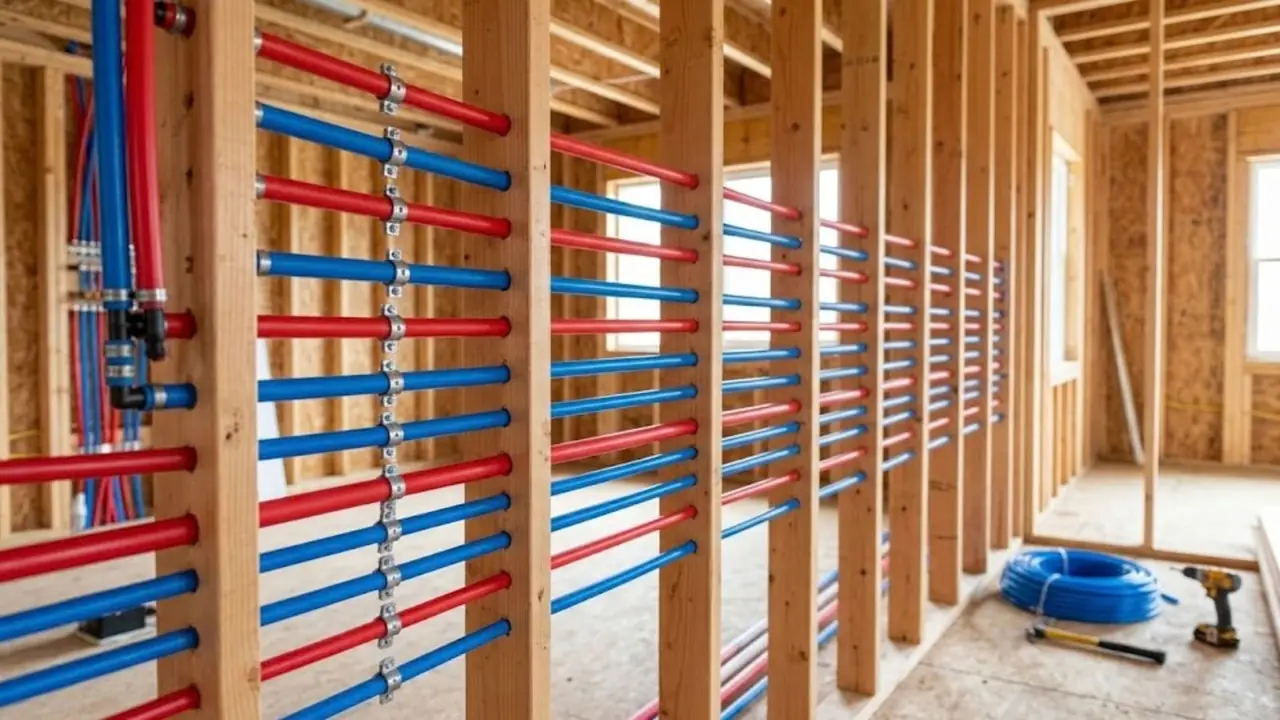
Replacing copper with PEX is one of the most common repipe questions. PEX is a flexible plastic pipe that is faster to install and often cheaper in materials and labor. Copper is rigid, long-lived and has decades of track record.
The honest answer is that a copper system in good condition does not need replacing. A repipe makes sense when copper is failing, with pinhole leaks, corrosion, green stains at joints or repeated repairs. In that case PEX is a common replacement.
This guide compares the two, covers the points that matter in northern Illinois and explains what the permit and inspection steps look like.
Copper and PEX compared
Each has strengths.
| Factor | Copper | PEX |
|---|---|---|
| Installation | Rigid, soldered joints, slower | Flexible, fewer fittings, faster |
| Cost of materials | Higher | Lower |
| Track record | Many decades | Several decades, shorter than copper |
| Freeze resistance | Splits when frozen | More tolerant of freezing, can still fail |
| Sunlight and chemicals | Unaffected by sunlight | Must be protected from sunlight, some chemicals |
| Corrosion | Can pit or form pinholes in some water | Does not corrode |
When copper is worth keeping
Copper that is not leaking, not pitting and not stained green at joints can last for decades more. Repairing a single leak is a better value than repiping a whole house.
Look at the pipe where you can see it, such as near the water heater and the meter. Blue-green crust at the joints means corrosion. Pinholes look like tiny wet spots or dried white trails on the pipe. Water that is blue-green in the sink points to copper corrosion.
If you have had one leak in many years, repair it. If you have had three leaks in a year, plan a repipe. See repiping for how we approach it, and burst pipe repair if a section has already failed.
What a PEX repipe looks like
The plumber plans routes through the basement ceiling, walls and utility spaces. PEX is run from a central manifold to each fixture in many installations. That can reduce fittings and improve pressure balance, though it uses more pipe.
Drywall is opened only where needed. Walls and ceilings are patched afterward by a drywaller, or by the plumber if the scope includes it. Water is shut off for part of each day, and most houses are finished in a few days.
The new system is pressure tested before any wall is closed. The inspection happens after rough-in and again at the end of the job if the Village requires it.
Water chemistry and sizing
Pinhole leaks in copper are often linked to water chemistry. The right choice of pipe depends on the water. Test it before deciding, and ask the utility for the water quality report.
Pipe size matters. A system that was undersized for the fixtures will still have low pressure after repiping unless sized properly. We size the new lines for the load and check the pressure regulator at the meter.
What a repipe costs you in disruption
Repiping is messy but not as bad as people fear. Water is off for part of each day. Drywall is opened at access points, mostly in basement ceilings and some walls. Furniture near the work area should be moved.
Ask the plumber how long water will be off each day and where the walls will be opened. Ask who patches drywall. A clear plan makes the project far easier to live through.
Pressure, noise and flow after a repipe
PEX can change how water sounds in the walls. Water hammer, the thump when a valve closes quickly, can be louder in flexible pipe unless it is supported correctly. Good installs strap the pipe at proper intervals and add hammer arrestors where fast-closing valves are used.
Pressure should improve if the old pipe was corroded and narrowed. If the pressure is still low, the cause is often the regulator at the meter or the service line, not the pipes inside.
Insurance and resale
A completed, inspected repipe is a selling point. Buyers and insurers like to see new supply lines on an older house. Keep the permit, the final inspection record and the plumber's invoice in your file.
Some insurers ask about the pipe material when they write a policy. Ask yours whether the type of pipe affects your premium before you decide.
Planning the work around your household
A whole-house repipe usually means opening walls in a few places and shutting the water off for part of a day or longer. Ask the plumber how the work will be staged, so you know when the kitchen and bathrooms have water again.
Move furniture away from the walls that will be opened and plan for dust. Ask who handles patching the drywall, because many plumbers leave that to a separate trade. Settling these questions before the first cut keeps the job from dragging on.
Questions to ask the plumber
Ask which PEX type and fittings they use, how they handle the connection at the meter and at the water heater, and whether the work needs a permit and inspection. A good plumber answers all three without hesitating.
Huntley note: permits, inspections and your water
The Village of Huntley lists plumbing systems among projects that need a permit. Development Services at (847) 515-5252 handles permits and inspections, and the Village does not schedule same-day inspections. Call by 2 p.m. for the next business day.
Huntley adopted the Illinois State Plumbing Code, which sets the rules for approved pipe materials. Illinois requires work to be done by a licensed plumber.
The Village's 2023 water quality report lists sodium at 130 ppm after cation exchange treatment and does not publish hardness. For questions about water chemistry and your pipes, call the Water Division at (847) 515-5222.
Frequently asked questions
Both are good pipes. PEX is easier to install and does not corrode. Copper has a longer track record.
It tolerates freezing better than copper, but it can still fail. Insulate pipes in exposed areas.
A typical house takes a few days. Larger homes take longer.
Yes. Plumbing systems typically need a permit and inspection. Call (847) 515-5252.
Older homes with galvanized or aging copper lines. Most homes built since 1999 have newer pipe.
Still unsure what you are dealing with? Describe it to a dispatcher and get a straight answer.
Call (847) 281-8626If you are weighing a repipe, call for a walk-through. We also cover Hampshire and Gilberts, and plumbing installation covers new work.
According to plumbing standards, approved pipe materials are set by the Illinois State Plumbing Code that Huntley adopted.