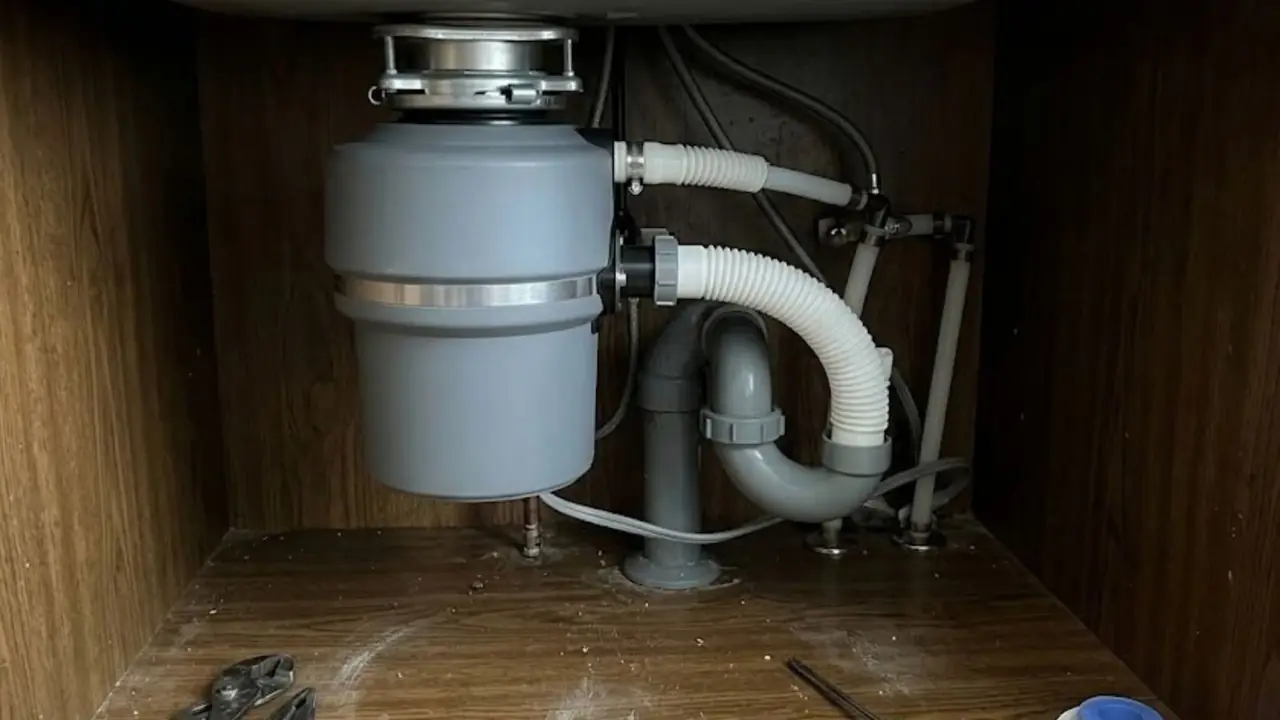
A garbage disposal install has four parts: mounting the unit under the sink flange, wiring or plugging it in, connecting the drain and connecting the dishwasher. A like-for-like swap on a sink that already has a disposal takes most homeowners a couple of hours. A first-time install, where there is no outlet and the drain has to change, takes longer and involves more trades.
The honest answer on whether to do it yourself depends on three things. Is there already a switched outlet under the sink? Does the drain trap line up with the new outlet? And are you comfortable shutting off power at the panel and handling plumbing connections? If any answer is no, call a plumber.
This guide covers sizing, the install steps, the mistakes that cause leaks and when the job needs a permit in Huntley.
Pick the right size and type
Disposals are sold by horsepower. A half horsepower unit handles light use by one or two people. Three quarter horsepower suits most families. One horsepower and above is for heavy use or households that grind a lot. Bigger motors cost more and weigh more, so check that the mounting ring on your sink can hold the unit.
There are two types. A continuous feed unit runs while the switch is on and you feed scraps in as it runs. A batch feed unit only runs when a stopper is in place, which many homeowners prefer for safety. Continuous feed is more common.
Look at the size of the existing sink hole and the clearance under the sink. A deep, wide unit may not fit over a pipe or a shallow cabinet.
Disposal install: DIY or plumber
The right choice depends on what is already under the sink.
| Situation | DIY realistic? | Why |
|---|---|---|
| Replacing an old disposal with a similar one | Often yes | Mounting and drain lines already match |
| No disposal now, but a switched outlet exists | Maybe | You still need to rework the drain and add a dishwasher connection |
| No disposal and no outlet | Call an electrician and a plumber | New circuit and wiring may be needed |
| Drain or trap is corroded or leaking | Call a plumber | Repair first, then install |
Install steps in order
Turn off power to the circuit at the panel and confirm it is dead with a tester. Disconnect the old unit and the drain lines, then loosen the mounting ring and lower the unit out. Clean the flange, apply plumber's putty under the new sink flange and set the mounting assembly.
Hang the new unit from the mount, line up the discharge with the drain trap and tighten the connections. Connect the dishwasher drain hose to the dishwasher inlet on the disposal. Knock out the dishwasher plug inside the unit with a screwdriver and hammer if a dishwasher is connected, or the dishwasher will not drain.
Reconnect power, run cold water and test for leaks. Watch every joint for a few minutes with a dry paper towel.
Mistakes that cause leaks and callbacks
These are the ones we see most.
- Forgetting to knock out the dishwasher plug, so the dishwasher drains into a blocked port.
- Over-tightening the mounting ring or the drain connection and cracking a plastic fitting.
- Skipping plumber's putty at the sink flange, which leaks through the sink hole.
- Using the old trap with a corroded joint when it should be replaced.
- Hardwiring without shutting off power and confirming it is dead.
What the disposal does not fix
A new disposal does not fix a slow drain. If the sink drained poorly before, the trap or line downstream is partly blocked, and the new unit will back up too. Clear it first. See drain cleaning for how that is done.
A disposal is also not a grease handler. Hot cooking fat cools in the pipe and builds a coat. Pour grease into a can and throw it away. Run cold water during use and for a few seconds after, so scraps flush through.
If the disposal is part of a larger kitchen plumbing project, such as a new faucet and a relocated sink, bring all of it into one visit. See garbage disposal repair for repair and replacement jobs we handle.
Wiring and power: the part to respect
Most disposals plug into an outlet under the sink, controlled by a wall switch. Some are hardwired. Either way, the circuit has to be rated for the motor, and a kitchen outlet near water should be protected by a GFCI.
If the sink has a switched outlet already, the install is mostly plumbing. If it does not, adding one is an electrician's job in most cases. Running a new circuit takes planning, and a plumber and an electrician can coordinate so the sink is not out of service for long.
What to do before you start
Safety first, every time.
- Switch off the breaker and confirm the circuit is dead with a tester.
- Do not put a hand into the disposal, even when it is off.
- Wear eye protection when you loosen the old mounting ring.
- Close the sink shutoffs and keep a bucket under the trap.
Huntley note: permits and what the Village says
The Village of Huntley lists plumbing systems among the projects that need a permit. A small like-for-like disposal swap is a minor job, but a project that changes your plumbing layout may need one. The Village's Development Services office, at 10987 Main Street, answers permit questions at (847) 515-5252.
Illinois requires plumbing work to be done by a licensed plumber, and the state's public health department publishes a license verification tool. If you do hire out the install, confirm the license first.
Huntley adopted the Illinois State Plumbing Code in its municipal code. The code's rules on fixtures, traps and vents apply to any new connection, so a trap that is too long or a missing vent can fail inspection.
Frequently asked questions
If there is already a switched outlet and the drain lines up, many homeowners can do it. If power or drain work is needed, call a licensed plumber and electrician.
A like-for-like swap takes about two hours. A first-time install with new wiring and drain changes takes longer.
A like-for-like swap is minor, but a layout change may need a permit. Call Development Services at (847) 515-5252 to check for your address.
Half horsepower for light use. Three quarter for most families. One horsepower or more for heavy use.
Older homes with galvanized or corroded drain traps need new fittings. Newer subdivisions around Talamore or Covington Lakes usually have plastic traps that connect without much rework.
Still unsure what you are dealing with? Describe it to a dispatcher and get a straight answer.
Call (847) 281-8626If the install turns up trouble, call the 24/7 line. We also cover Algonquin and Lake in the Hills for kitchen plumbing work.
Follow the manufacturer's installation standards for the electrical and drain connections.