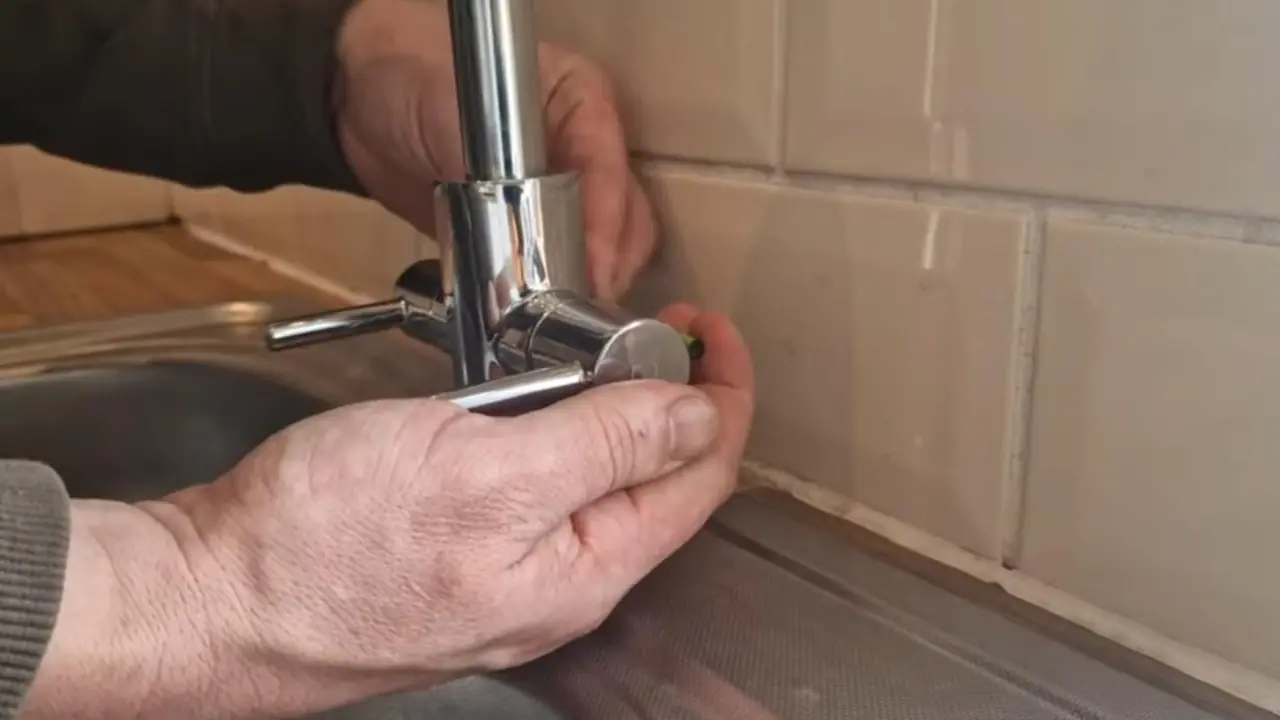
A bathroom faucet is one of the easier plumbing repairs, as long as you know what type you have. A drip from the spout is almost always a worn washer, seat or cartridge. A leak around the handle is a worn O-ring. Low flow is a clogged aerator.
The first step is to figure out the type. Compression faucets have two separate handles that you turn several times. Cartridge, ball and ceramic disc faucets are usually single-handle or two-handle models that turn a quarter turn or so. Each uses different parts.
This guide covers the steps, the tools and the point where replacement beats repair.
Faucet types and the usual repair
Identify yours first.
| Type | How it feels | Usual repair |
|---|---|---|
| Compression | Two handles, turn several rotations to close | Replace the rubber washer and seat |
| Cartridge | Smooth, often single handle | Replace the cartridge |
| Ball | Single handle with a ball under the cap | Replace seals and springs, or the ball |
| Ceramic disc | Smooth, quarter turn | Replace the disc cylinder |
Step by step
Close the shutoff valves under the sink, then open the faucet to relieve pressure. Plug the drain so small parts do not fall in. Remove the handle by prying off the cap and unscrewing the screw. Then remove the retaining nut or clip to pull the cartridge or stem.
Take the old part to the store or photograph it with the model name. Match it exactly. A cartridge that is close is not the same, and the wrong one leaks. Install the new part, reassemble in reverse and turn the water on slowly.
Check for leaks at the handle, the base and under the sink. If it still drips, the valve seat may be pitted. A seat dresser tool can smooth it, or the faucet is due for replacement.
Low flow, aerators and scale
If water comes out weakly, unscrew the aerator at the tip of the spout. Inside is a small screen that traps debris and mineral scale. Soak it in vinegar for an hour, brush it and put it back.
If the flow is still weak, check the supply lines and the shutoff valves under the sink. A half-closed valve or a kinked flex line restricts flow. Replace worn flex lines. They are inexpensive and they fail without warning.
When to replace instead
If the finish is worn, the body is cracked or the parts are no longer made, replacement is the better choice. A faucet that needs a new cartridge every year is telling you something about the water or the unit.
If the shutoff valves do not close, or they leak when moved, replace them at the same time. See faucet repair for what we do. If the sink also drains slowly or the disposal acts up, see drain cleaning.
Tools and parts to have ready
You will need an adjustable wrench, a screwdriver set, a hex key set, plumber's grease and a small container for parts. A basin wrench helps reach the nuts behind the sink. Photograph each step so you can reassemble in the right order.
Buy the replacement part before you start if you can identify it, but do not be surprised if you have to take the old one to the store. The model name is often printed on the faucet body or in the original paperwork.
Common mistakes to avoid
Do not force a stuck handle. Heat from a hair dryer and a little penetrating oil loosen mineral buildup. Do not overtighten the retaining nut, since plastic and brass strip easily. Do not forget to plug the drain before you start.
Open the faucet before you turn the water back on, so air can escape. A burst of air and spitting water on the first run is normal. If it keeps spitting, the aerator may be clogged with debris from the repair.
When the faucet and the supply lines age together
Flexible supply lines under the sink are rated for a limited life, and they fail without warning. If the faucet is old enough to need a repair, the supply lines are probably old too. Replacing them at the same time costs little and removes a common source of floods.
Look for rust on the nuts, bulges in the braid or damp spots on the cabinet floor. Any of those means replace now.
Know when the faucet itself is the problem
A faucet that has been repaired more than once, has corroded parts, or is no longer made is often cheaper to replace. Parts for discontinued models can be hard to find, and each repair costs a service visit.
Check the shutoff valves under the sink before you start. If they will not turn or they drip, replace them in the same visit. A shutoff that fails later can turn a small job into a flooded cabinet.
Tools that make the job easier
A basin wrench reaches the nuts behind the bowl, and a small container keeps screws from rolling down the drain. Put a towel under the sink and cover the drain opening before you loosen anything. Small precautions like these prevent most repair mishaps.
Huntley note: your supply and what it leaves behind
Huntley's water is treated at five cation exchange plants, and the Village's 2023 water quality report lists sodium at 130 ppm. The report does not publish hardness, so we cannot say from it how much scale builds on your aerator.
White crust on the aerator or around the base of the faucet means scale. Clean it regularly. If you have a home softener, you will see less.
A like-for-like faucet swap is minor work, but changes to the plumbing layout may need a permit. Development Services at (847) 515-5252 can tell you.
Frequently asked questions
A worn washer, seat or cartridge. Replacing it stops the drip.
Count the handles and feel how they turn. Compression faucets need several rotations. Others turn a quarter turn.
The aerator is likely clogged. Clean it first.
No. The shutoff valves under the sink are enough.
It depends on your water and whether you have a softener. Test your tap and check the aerator.
Still unsure what you are dealing with? Describe it to a dispatcher and get a straight answer.
Call (847) 281-8626If the repair is beyond a cartridge, call. We cover Pingree Grove and Algonquin, and toilet repair and installation often goes with it.
The manufacturer's guidelines list the cartridge number for your model.