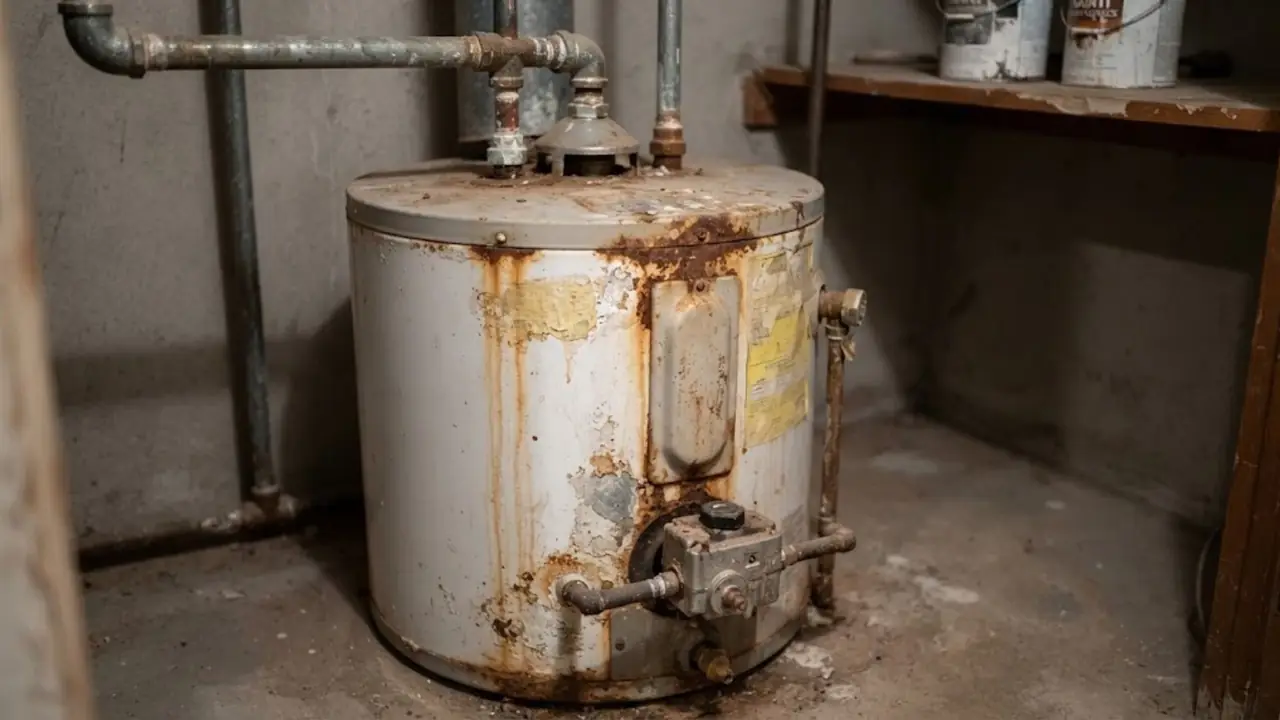
Inside every tank water heater is a metal rod, usually magnesium or aluminum, that corrodes so the steel tank does not. This is called a sacrificial anode. The rod wears away over years, and when it is gone, the tank starts to rust from the inside.
Checking and replacing the rod can add years to a heater's life if the tank is still sound. It cannot save a tank that is already rusting through. The decision depends on the age of the heater and how the rod looks.
This guide explains how to check, what to do with what you find and when it is time to stop repairing and replace the tank.
What the rod does and why it wears
Water in a steel tank is a corrosion problem waiting to happen. The anode is more reactive than steel, so it corrodes first and protects the tank. As it is used up, the protection fades.
How fast it wears depends on the water. Soft water, or water with a lot of dissolved minerals, can speed it up. A water softener changes the chemistry, and many homeowners find the rod wears faster after one is installed.
Most manufacturers suggest checking the rod every few years. Many heaters are never checked, and by the time a leak appears the rod has been gone for a long time.
What the rod looks like and what to do
Pull the rod and look.
| Condition | What it means | Action |
|---|---|---|
| Thick, mostly intact | Plenty of protection left | Put it back and check again in a couple of years |
| Thin in places, partly bare steel core | Getting low | Replace the rod |
| Mostly gone, core wire exposed | Little or no protection | Replace now. Check the tank for rust |
| Tank leaks or rust-colored water | Tank is failing | Replace the heater, not the rod |
How it is done
Turn off power to an electric heater at the breaker, or set a gas heater to pilot. Close the cold water supply and relieve pressure by opening a hot tap. Drain a few gallons from the drain valve so the water level is below the rod.
The rod is under a hex head on top of the tank, and it is usually held tight. A breaker bar or an impact wrench helps. Unscrew it and pull it out. Some heaters have little clearance above the tank, and you use a flexible rod.
Install the new rod with pipe thread tape, tighten it and refill the tank. Open a hot tap to purge air. Turn the power or gas back on only when the tank is full.
Is it worth it on an older heater?
A rod swap is inexpensive. It makes sense on a heater less than ten years old with no sign of leaks. On a heater at twelve or fifteen years, the tank may already be corroded, and a new rod will not undo it.
If the tank is rusty at the base, if the water has a metallic taste or color, or if the heater is making popping noises from sediment, plan for replacement. See water heater replacement for what it involves. If the heater still works but is old, you can schedule a planned install and avoid a flood. See water heater repair for what we fix.
Types of anode rods
Magnesium rods protect best and wear fastest. Aluminum rods last longer and are used in some areas where magnesium causes odor problems. A powered anode uses a small electric current to protect the tank and does not wear away.
If your hot water smells like rotten eggs, the rod can be reacting with bacteria in the tank. A plumber can swap to an aluminum or powered rod and flush the tank. That fixes the smell in many cases.
A simple maintenance schedule
Flush a few gallons from the drain valve once a year to clear sediment. Check the anode every two to three years. Test the relief valve once a year by lifting its lever briefly and watching it drain.
Write the dates on the tank with a marker. A heater with a log is one you will not forget. These small steps are the cheapest way to get the full life out of the tank.
How to tell the rod is worth replacing now
Pull the rod and look at it. If it is worn thin, pitted or reduced to the core wire, it has done its job and the tank is now taking the corrosion. A rod that is still thick and mostly intact can stay in service.
Replacing a spent rod on a tank that is otherwise sound can add useful years. On a tank that already leaks or has heavy rust at the base, a new rod will not help, and replacement is the better spend.
Huntley note: water, softeners and your tank
The Village of Huntley treats its groundwater at five cation exchange plants, and the 2023 water quality report lists sodium at 130 ppm. The report does not publish a hardness figure. Because the Village does not tell us the hardness, we cannot say how fast anodes wear in your house.
If you added a home softener on top of the Village water, tell the technician. Softened water can wear a magnesium rod faster, and an aluminum or powered anode may be recommended.
Replacing a whole water heater in Huntley needs a permit and a final inspection. Development Services at (847) 515-5252 handles that, and inspections are not same day.
Frequently asked questions
Every two to three years is a common recommendation. Check it sooner if the water is rusty or you added a softener.
No. A leak means the tank has failed. Replacement is the only fix.
Often yes. Tell the technician if you have one.
It lasts longer and does not wear. It costs more and needs power. It is an option when the tank is in good shape.
Yes. Homes built since the late 1990s growth have heaters that are reaching the age when anodes are worn.
Still unsure what you are dealing with? Describe it to a dispatcher and get a straight answer.
Call (847) 281-8626If the tank is sound, a new rod buys time. If not, plan the swap. We cover Algonquin and Pingree Grove too, and water heater installation is a planned service.
According to most manufacturers' guidelines, the anode should be checked every few years.