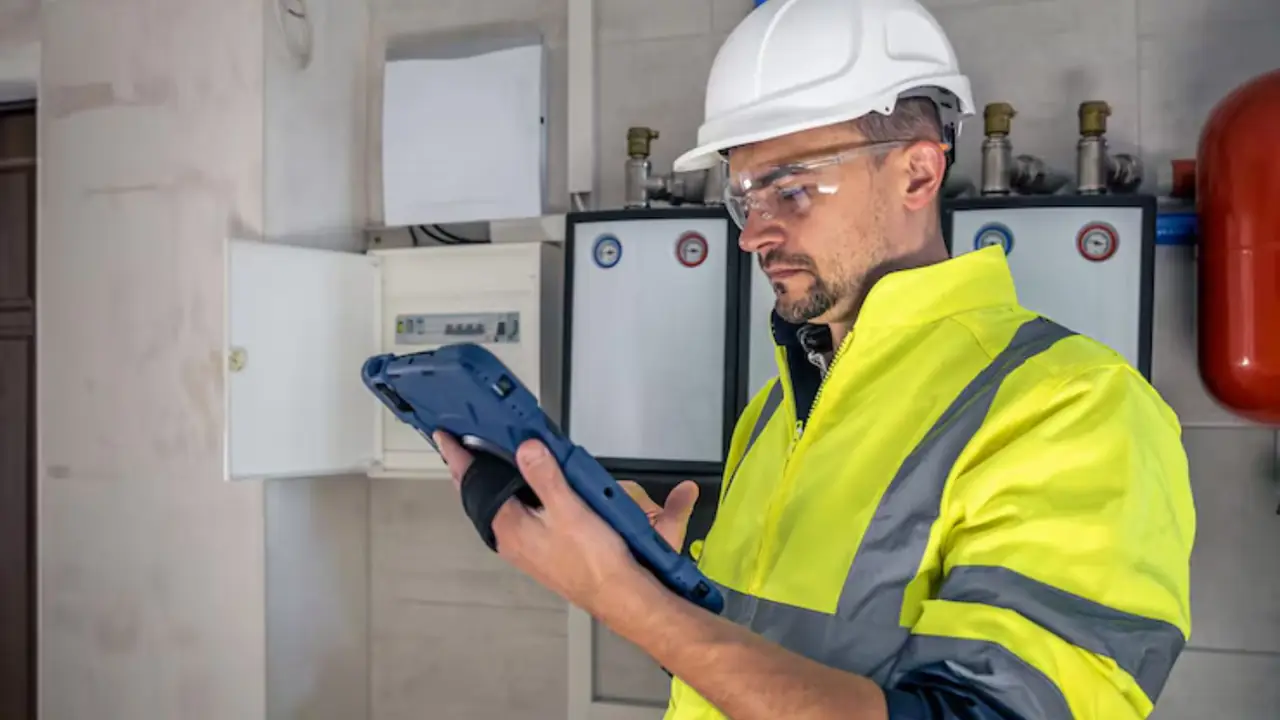
Vaillant is a European boiler brand, and its boilers turn up in American homes that were fitted with a high efficiency unit. Like most modern boilers, it has a display that shows a fault code when something is wrong.
The first rule is to read the code and look it up in your owner's manual. Fault codes differ by model and year, and we are not going to guess what yours means. The manual lists them. If you do not have the manual, the model number on the data plate lets you find it online.
This guide covers the checks a homeowner can safely do and the point where a plumber or heating technician should take over.
Safety before any repair
If you smell gas, leave the house and call the gas utility or 911 from outside. Do not use switches or phones inside. Call us after the utility says it is safe.
A carbon monoxide alarm should be on every level of a home with a gas boiler. If it sounds, get everyone out and call 911.
Do not open sealed combustion parts or bypass safety controls. Those are not homeowner jobs.
Checks you can do yourself
These do not require opening the boiler.
| Check | What to look for | If it is wrong |
|---|---|---|
| Pressure gauge or display | Reading in the range printed in the manual when the system is cold | Low pressure means a leak or a fill needed. See the manual |
| Power and thermostat | Switch on, thermostat calling for heat | Replace thermostat batteries, reset the breaker |
| Gas supply | Other gas appliances working | Call the gas utility if none work |
| Condensate drain | Clear line, no ice in winter | Thaw or clear a blocked condensate line |
| Display fault code | The code and any message | Look it up in the manual, then call if it does not clear |
Common reasons a boiler stops heating
Low system pressure is the most common cause. A leak somewhere in the heating loop drops the pressure, and the boiler shuts down to protect itself. Topping up the pressure may clear the fault, but if it drops again, there is a leak to find.
A blocked condensate line is the second. High efficiency boilers produce acidic condensate that drains through a plastic line. In a cold basement or utility room, that line can freeze and the boiler locks out.
Air in the system causes cold radiators and noise. Bleeding radiators helps. A failed circulator pump, a faulty ignition electrode or a failed sensor needs a technician.
When to call
Call if the fault returns after a reset, if the pressure keeps dropping, if you see water at the base, or if there is any smell or soot. Do not keep resetting a boiler that keeps locking out. Each reset fires the burner again.
Tell the dispatcher the model, the fault code and what you tried. That lets the technician bring the likely parts. We service many brands, and we will tell you on the phone if a part for your model is hard to get. See boiler repair for what we handle, and water heater repair if the boiler also feeds your hot water.
Keeping a record helps the technician
Write down the model number from the data plate, the date of the last service and the fault code you saw. Take a photo of the display and the pressure gauge. If the boiler locks out again, note what time it happened and whether the heat was running.
That record turns a vague call into a short one. A technician who knows the model and the code can bring the likely parts, and you may avoid a second trip.
Condensate and winter
High efficiency boilers cool the exhaust so much that water vapor condenses in the unit and drains away through a small plastic line. That line often runs through a cold basement wall or out through the foundation.
When a hard freeze hits northern Illinois, a condensate line that is not pitched or protected can fill with ice and shut the boiler down. Clearing it takes minutes if you can reach it. If it keeps freezing, the line needs rerouting or heat tape.
What not to do while you wait
Do not bypass a safety device, jump a sensor or keep resetting a boiler that locks out again and again. Each reset can send more fuel into a chamber that is not lighting properly.
If you smell gas, leave the house and call from outside, then contact the gas utility. If the boiler is leaking, turn off the water feed and the power and keep people away from hot pipes. A short wait for a technician is safer than a repair attempt on a gas appliance.
Why yearly service pays off
Many boiler faults trace back to dirty burners, low water pressure or a worn part that a yearly check would have caught. Booking service before the heating season in Huntley puts the work ahead of the first cold week, when repair calls come in all at once.
Huntley note: permits and inspections
Replacing a boiler in Huntley involves plumbing and often gas piping, and the Village of Huntley lists plumbing systems among the projects that need a permit. Development Services at (847) 515-5252 answers questions, and the Village does not schedule inspections for the same day. Call by 2 p.m. for the next business day.
Huntley adopted the Illinois State Plumbing Code. Repairs that replace a part do not usually need a permit, but replacing the whole boiler does.
Boilers are less common than forced air furnaces in newer homes, so finding someone who services yours is part of the decision.
Frequently asked questions
It depends on the model and year. Look up the code in your owner's manual, or give it to the dispatcher with the model number.
There is a leak in the heating loop or a failed expansion vessel. A technician finds and fixes it.
On many models yes, following the manual. If it drops again, call.
Once a year, before the heating season.
Tell the dispatcher the make, model and fault code. We confirm on the phone whether we can service it and whether parts are easy to get.
Still unsure what you are dealing with? Describe it to a dispatcher and get a straight answer.
Call (847) 281-8626We cover Algonquin and Hampshire as well. Boiler repair is available on the 24/7 line for heating emergencies.
According to the manufacturer's manual, the fault code list and pressure range for your model are the standards to follow.