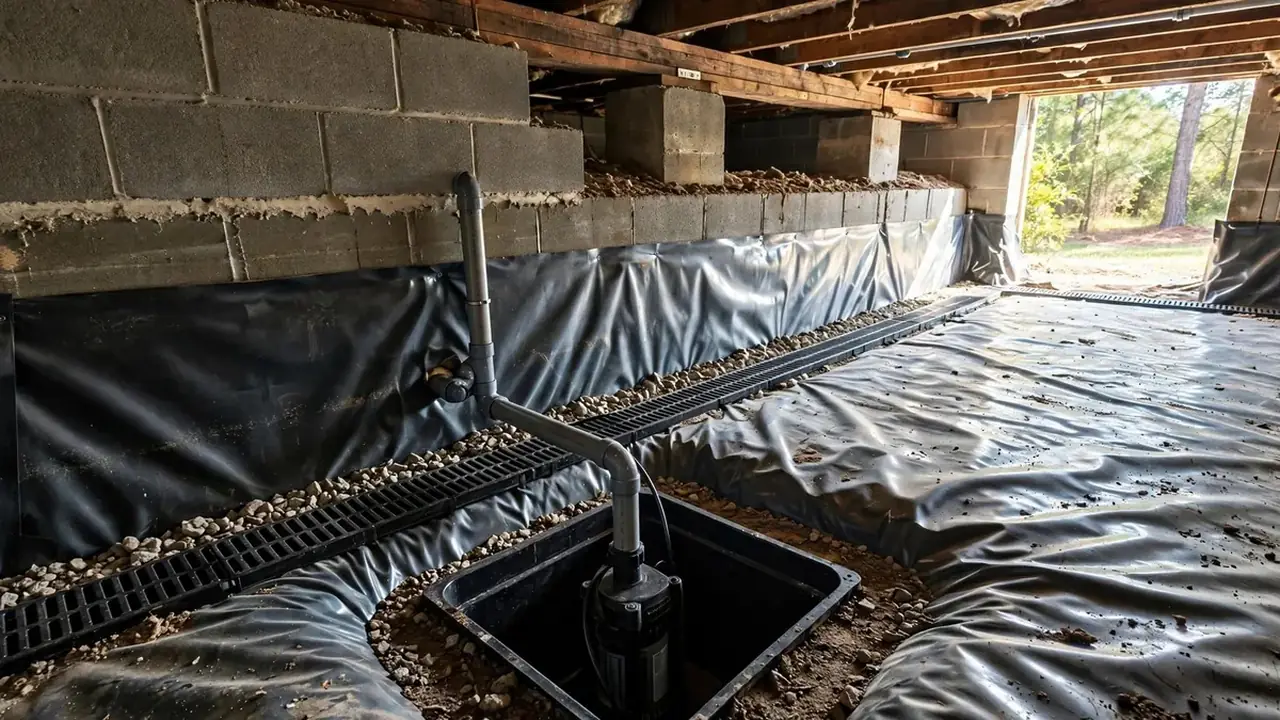
Basement water comes from two broad sources. Groundwater and rain enter through the foundation, floor or window wells. Plumbing leaks come from pipes, fixtures, the water heater or a failed sump or sewer. They look similar on the floor, but the fixes are entirely different.
Telling them apart saves money. Waterproofing a foundation does not help if the real problem is a pinhole in a supply line. A plumber repairing a pipe does not help if the real problem is a high water table.
This guide covers the most reliable ways to sort it out, in order from easiest to most involved.
Start with timing
When does it get wet? Water that appears after rain or snowmelt is almost certainly groundwater or surface drainage. Water that appears on a dry day, or increases when you run a fixture, is a plumbing leak. Water with a sewer smell and rising from a floor drain is a drain backup.
Keep a log. Note the date, the weather, whether anyone ran a washer or took a shower, and where the water appears. A pattern is the most reliable clue you have.
Check the water heater, the washing machine hoses and the sump pit first. They are common culprits and easy to see.
Tests that separate plumbing from groundwater
Do these in order.
| Test | What it shows | How |
|---|---|---|
| Meter test | Whether a supply leak exists | Turn everything off and watch the water meter |
| Dry-day check | Whether water appears without rain | Look after several dry days |
| Foil test | Whether moisture comes through the wall or condenses | Tape foil to the wall and check which side gets wet |
| Thermal camera or moisture meter | Where the wet area is | Scan walls and floors for cold or wet spots |
| Isolation | Which supply line is leaking | Close valves one by one and watch the meter |
Reading the wet spots
Water at the base of a wall where the floor meets the foundation usually points to seepage at the cove joint. Water in the middle of the floor after rain can be groundwater pushing up. Water on a wall below a bathroom or kitchen points to a supply or drain leak above.
A damp spot that never dries and smells musty is often condensation, not a leak. Cold water pipes sweat in humid weather, and basement walls can condense too. A dehumidifier and insulation on cold pipes help.
If the meter moves with everything off, the leak is in the plumbing. See leak detection for how we find it.
What to do with the answer
If the source is groundwater, start outside. Clean gutters, extend downspouts, check the grade and look at window wells. Many seepage problems stop there. If water still comes in, an interior drain and sump pump are the next step. See basement waterproofing and sump pump service.
If the source is plumbing, shut the supply and call. Dry the area quickly. Mold begins within a day or two of persistent dampness.
Do not paint or seal over a leak. Water finds another way.
Condensation, seepage and plumbing: the look of each
Condensation shows up as beads of water on cold pipes and walls, mostly in humid weather. It leaves a damp but even film. Seepage shows up as water at the wall base or in cracks, usually after rain. Plumbing leaks tend to leave a stain or drip in one place, often below a fixture.
If you can reach the wall, press a dry paper towel against it. Water that comes through the wall leaves the towel wet on the wall side. Condensation leaves it wet on the room side.
Safety and cleanup
If water is near outlets, turn off power to that area at the panel. Do not stand in water to do it. If sewage is involved, wear gloves and boots and keep children out. Dry the area within a day or two to limit mold.
Photograph everything before cleanup and keep receipts. If the water came from a plumbing failure, your homeowner policy may cover part of the damage. Groundwater seepage is often excluded, so read your policy before assuming.
Telling a leak from condensation
A cold water pipe in a humid basement can sweat enough to drip. That looks like a leak but is not one. Wipe the pipe dry and check it again in an hour. If it stays dry for a while and then beads up, it is condensation.
A real leak keeps coming back at one point, usually a joint, valve or fitting. Put a dry paper towel under the spot overnight. A towel that is damp in the morning in the same place points to a leak worth a plumber's visit.
What to do once you find the spot
Photograph the leak, shut off the nearest valve if you can reach it, and move stored items off the floor. Write down when you first noticed it. A short record helps the plumber and helps with any insurance conversation later.
Huntley note: sump discharge and permits
The Village of Huntley code says sump pump discharge may not go into the sanitary sewer or onto the public right-of-way. It goes outside on your property or to a storm sewer structure as the Village directs. If you add a sump to solve a wet basement, plan the discharge before the pit is dug.
Plumbing systems need a permit from the Village, and Development Services at (847) 515-5252 answers questions. Illinois requires a utility locate before digging, at 811.
The Village Water Division at (847) 515-5222 can help with questions about your meter if a leak is suspected.
Frequently asked questions
Check timing. Rain-related water is groundwater. Water on a dry day or that changes when you run a fixture is plumbing. A meter test confirms.
No. Condensation is common. Foil taped to the wall shows which side the moisture is on.
Paint does not stop water that is pushing through a wall. Fix the drainage first.
Start with the meter test. If it moves, call a plumber. If not, look at the outside drainage.
Spring thaw and rain raise groundwater. Lots that slope toward the house see it first.
Still unsure what you are dealing with? Describe it to a dispatcher and get a straight answer.
Call (847) 281-8626Sorting out the source is the hard part. We cover Gilberts and Pingree Grove too, and sump pump service is available around the clock.
According to the Village code, sump discharge has to follow the rules on where it may go.