Waterproofing paint, sold as masonry sealer or waterproofer, is a thick coating that goes on concrete or block walls. It fills pores and forms a barrier on the surface. It is cheap, DIY friendly and widely sold.
What it does well is slow moisture vapor and light dampness through porous masonry. What it does not do is hold back water under pressure. If groundwater is pushing against a wall, the coating can blister, peel or fail, sometimes within a season.
This guide explains what the paint can do, how to use it properly and what to fix first.
What paint can and cannot do
Match the product to the problem.
| Problem | Paint helps? | Better fix |
|---|---|---|
| Damp, chalky wall with no visible water | Often yes | Clean, prep and apply two coats |
| Efflorescence, white powder on concrete | For the surface, partly | Fix the moisture source first |
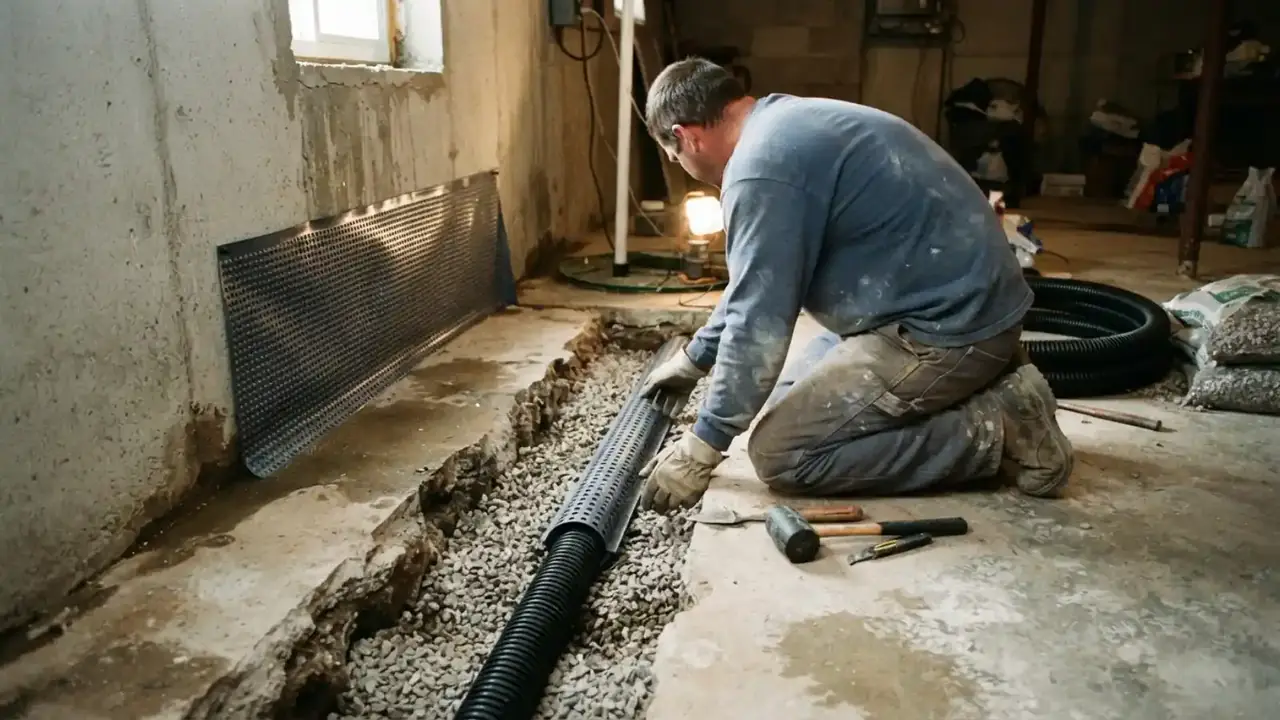
| Water seeping at the floor wall joint | No | Interior drain and sump, see basement waterproofing |
| Active crack leaking | No | Crack injection or exterior repair |
| Condensation on cold walls | No | Dehumidifier, insulation, ventilation |
How to apply it properly
Prep is most of the job. Remove old paint and loose material with a wire brush. Clean off efflorescence with a stiff brush and a mild acid wash if the manufacturer calls for it. Fill cracks and holes with hydraulic cement. Dampen the wall lightly if the product asks for a damp surface.
Apply in two coats, working the paint into the pores with a stiff brush or heavy-nap roller. Let each coat cure per the label. Do not apply in cold weather. Most products need temperatures above fifty degrees.
Paint only a small test area first. Wait a few rain cycles and see whether it holds before covering the whole basement.
Why it fails when there is real pressure
Groundwater pushes through concrete with force, called hydrostatic pressure. A coating on the inside surface of the wall sits on the dry side. Water pushes the coating off from behind, and it blisters and peels. The water has not gone away. It is now trapped behind the paint, where it can feed mold.
If the wall is damp only after rain and the moisture returns after painting, the cause is outside. Check gutters, downspouts and grading first. Water needs to be moved away from the foundation before any interior fix will last.
If a sump pump already runs often, the system is handling groundwater. See sump pump service to keep it reliable.
The order of fixes
First, control the water outside: gutters, downspouts extended six feet, grade sloping away. Second, fix any plumbing leaks inside. See leak detection if you suspect one. Third, install an interior drain and sump if seepage is persistent. Last, paint, if you still want a sealed surface on dry masonry.
Painting first and fixing later wastes the paint. A dry basement needs the water solved, not covered.
Choosing a product
Read the label for what the product claims to do. Masonry sealers and waterproofing paints vary in how much moisture they hold back. Some are rated only for damp-proofing, meaning moisture vapor, and not for water under pressure.
Cement-based waterproofing coatings bond to masonry and can hold back some seepage. Latex-based paints sit on the surface and peel when pressure builds. Match the product to the problem you actually have, not the one the marketing implies.
Testing the wall before you paint
Tape a square of plastic sheeting tightly to the wall and leave it for a couple of days. If moisture collects on the wall side of the plastic, water is coming through the wall. If it collects on the room side, it is condensation.
That test is cheap and it saves a weekend of painting a wall that will fail. If water is coming through, solve drainage first, and treat the wall later.
Finishing a basement over a damp wall
Do not frame, insulate or drywall a wall that is still taking on moisture. Trapped moisture grows mold behind the finish and you may not see it until the smell arrives. Wait through at least one wet season and check the wall before you finish it.
If you plan to finish the basement, talk to a plumber about drainage and a sump system first. It costs less to fix the water before the walls go up than after.
Fix the water first, then paint
Waterproofing paint works on damp walls, not on walls with active seepage. If water is running down the wall or pooling at the floor joint after rain, paint will blister and peel within a season.
Look at the outside too. Gutters that dump near the foundation and soil that slopes toward the house send water to the same wall you are painting. Correcting the grade and extending the downspouts costs little and often does more than any coating.
Preparing the wall properly
Scrub off loose paint, efflorescence and any mold, then let the wall dry fully. Fill cracks and small holes first. A coating applied over dust or a damp surface will not bond, and the finish fails far sooner than the label promises.
Huntley note: groundwater, sump discharge and permits
The Village of Huntley code says sump pump discharge may not go into the sanitary sewer or onto the public right-of-way, and the Village adopted the Illinois State Plumbing Code. If you add a sump to solve basement seepage, plan where the discharge goes.
Development Services at (847) 515-5252 answers permit questions. Interior drain and sump work is plumbing, and licensed plumbers handle it in Illinois.
Spring thaw and heavy rain raise groundwater in northern Illinois, so watch the basement after those events before deciding what to fix.
Frequently asked questions
On damp masonry with no pressure, it can help. On a wall with water pushing through, it fails.
No. A flood means water pressure and volume that paint cannot hold.
Many years on dry walls. Months on walls with active moisture.
After. Fix drainage first.
It varies by lot and grade. Lower lots and those that slope toward the house see it first.
Still unsure what you are dealing with? Describe it to a dispatcher and get a straight answer.
Call (847) 281-8626If paint is not the answer, call. We cover Lake in the Hills and Gilberts, and basement waterproofing covers lasting fixes.
Read the product's published standards for what moisture it is rated to hold back.